Furnace Repair in Lincoln University, PA
Jon finds the cause, explains it in plain English, and fixes it if a repair makes sense. He usually calls back within minutes and can often come out the next day.
Serving PA: Chester, Delaware, Montgomery Counties | DE: New Castle County
- 10+ yrs Hands-on HVAC experience
- Free Install estimates
- Up to 12 yrs Manufacturer warranties on select systems
Get a free estimate
Before you submit, read our Privacy Policy and Terms & Conditions.
Most furnace repairs come down to one worn part
Furnace repair in Lincoln University usually means one part has worn out. It's often the igniter, flame sensor, capacitor, blower motor or control board. Each can be replaced without touching the rest of the furnace, and catching it early keeps the fix small.
Jon Radulski owns Rad Homes Contracting and comes out on every call. He finds the cause before he fixes anything. He won't push a new furnace you don't need. Repairs are one part of his heating work around Lincoln University.
These signs mean your furnace needs a repair
Furnaces rarely quit without warning. Call when you notice any of these.
Weak or cool air
The furnace runs, but the air at the vents feels lukewarm. The thermostat is set well above room temperature.
Short cycling
It turns on and off every few minutes instead of running full cycles. That wears out the igniter and blower faster.
New noises
Banging at startup, squealing or grinding. A healthy furnace hums and whooshes. It shouldn't clank.
A yellow flame
Burners should burn a steady blue. A yellow or flickering flame can mean the gas isn't burning cleanly.
A higher bill
The bill jumps, but the weather and your thermostat setting haven't changed. A struggling furnace burns more fuel.
Tripped breakers or codes
The furnace keeps tripping its breaker, or the control board blinks a code you haven't seen before.
Check these five things before you call
Some no-heat calls end without a visit. Try these first. Leave the inner panels, burners and gas line alone.
Thermostat
Set it to Heat, a few degrees above the room. If the fan is set to On instead of Auto, it blows cool air between cycles.
Power switch
Most furnaces have a switch nearby that looks like a light switch. It gets bumped off more often than you'd think.
Breaker
Reset a tripped breaker once. If it trips again, stop there and call.
Filter and panel door
Swap a clogged filter, then press the front panel firmly back into place. The furnace won't run if that door isn't seated.
Vent pipes and fuel
After a snowstorm, clear snow away from the white plastic vent pipes outside. On propane or oil, check the tank gauge.
A gas smell or a carbon monoxide alarm comes first
If you smell gas or your CO alarm goes off, get everyone out of the house. Call your gas utility or 911 from outside. The repair call comes after that.
The Consumer Product Safety Commission's carbon monoxide guide lists the symptoms and where alarms belong.
What happens when Jon comes out for a furnace repair
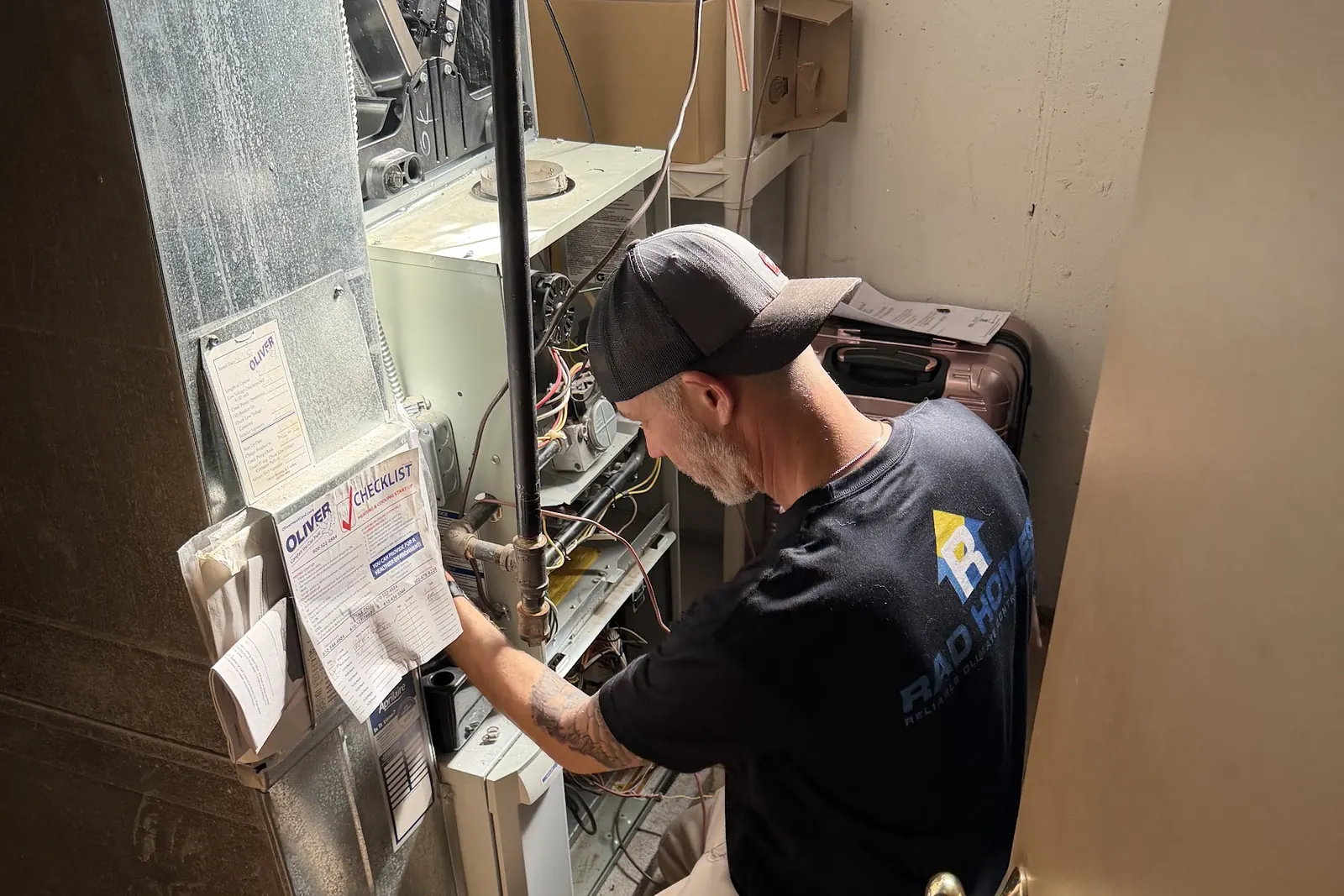
Call or text, and Jon usually gets back to you within minutes. He can often come out the next day. You get a text when he's on the way.
He starts with what you noticed, then runs the furnace through its startup and checks each part in order. He tells you what failed and why before any work starts.
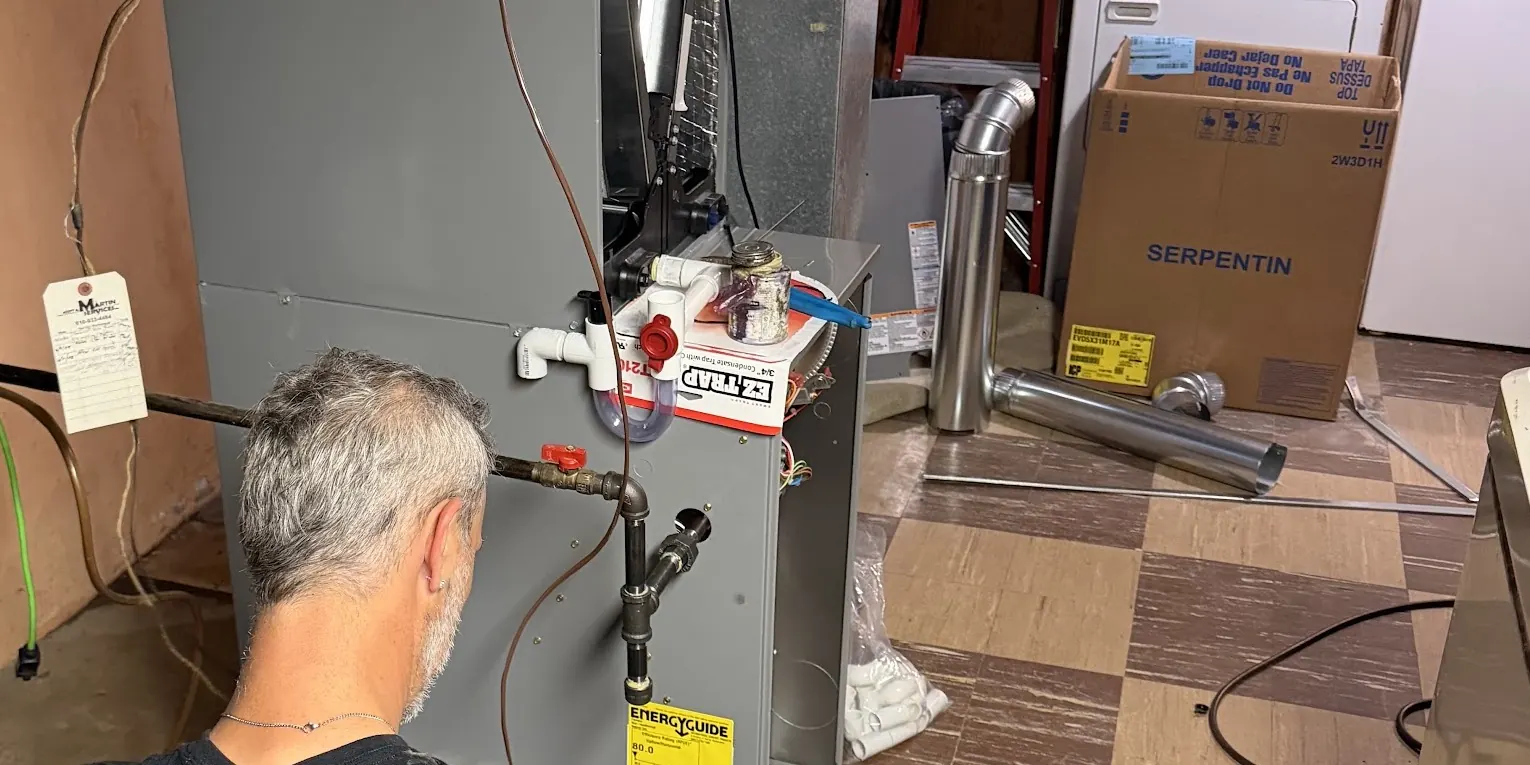
Afterward he watches the furnace run a full cycle. A recent oil furnace call in Pike Creek turned out to be a bad ignition connection, fixed on the same visit.
When an older furnace is worth replacing instead
A newer furnace with one bad part is almost always worth fixing. An old furnace that needs a big repair, or breaks down every winter, deserves a harder look. A cracked heat exchanger often decides it, because it can leak combustion gases.
If replacing makes more sense, Jon says so and shows you why. Estimates for a new furnace and installation are free. If yours runs fine and you want it checked before winter, book a fall heating tune-up instead.
Straight answers
Common questions
Q1How fast can Jon come out for a furnace repair?
On a cold night, a fast answer matters. Jon usually returns calls and texts within minutes and can often get there the next day. The person you describe the problem to is the one who fixes it.
Q2Why is my furnace blowing cold air?
Often the thermostat fan is set to On instead of Auto, so it blows air between heating cycles. If it's on Auto and the air is still cool, the igniter, flame sensor or fuel supply may be the problem. That's the time to call.
Q3Can a cracked heat exchanger be repaired?
Usually not safely. Welding or sealing a crack can still let combustion gases into your air. On a newer furnace, replacing just the heat exchanger can make sense. On an older one, that cost often points to a new furnace.
Q4Is it worth fixing an old furnace?
Yes for a small repair, usually not for a big one. A small part on an old furnace that still heats evenly is usually worth fixing. A major repair, like a blower motor or heat exchanger, on a furnace near the end of its life is money better put toward a replacement.
Q5Does Rad Homes repair oil furnaces?
Yes. Jon works on gas and oil furnaces in homes around Lincoln University. A recent oil furnace call in Pike Creek was a bad ignition connection, and he fixed it on the same visit.
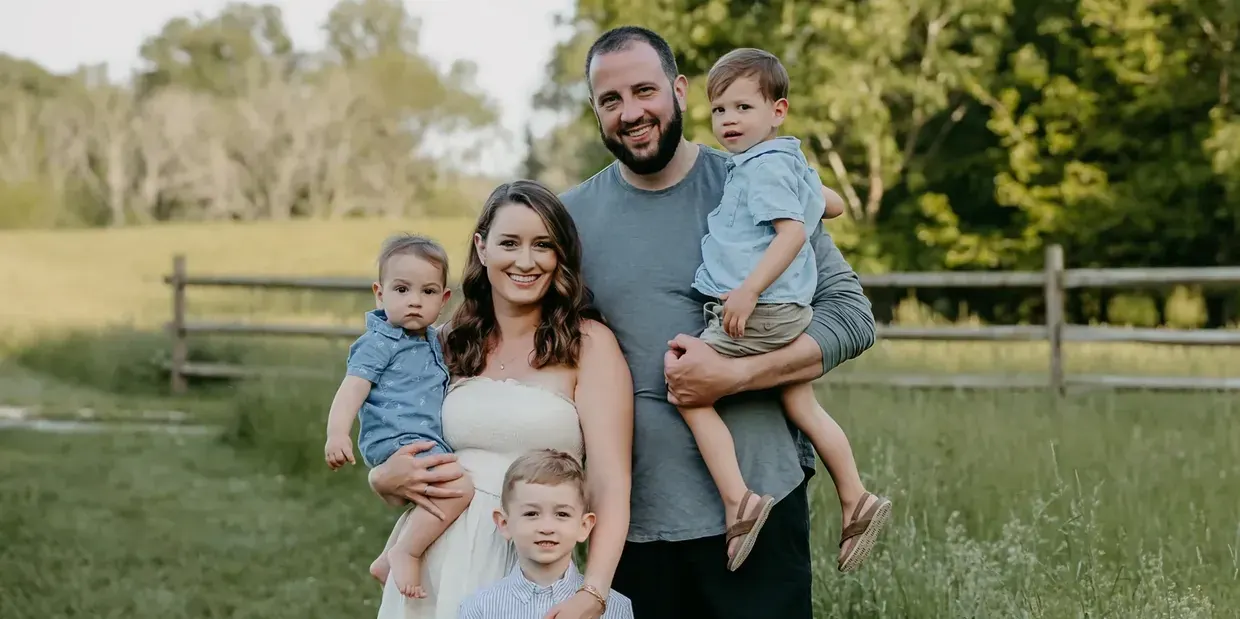
Who you'll work with
Jon Radulski, Owner
Jon Radulski has done hands-on HVAC installs and repairs for over 10 years. He started Rad Homes Contracting in 2025 to do installs the old way: sized for the house, done once and done right, with honest pricing. Jon and his wife Hilary are raising three boys, Cooper, Asher and Landon.
Rad Homes Contracting
Ready to get started?
Call or send a message and we'll set up a time to see the job.
(302) 584-8646Get a free estimate